Frequently asked Questions about our Hay
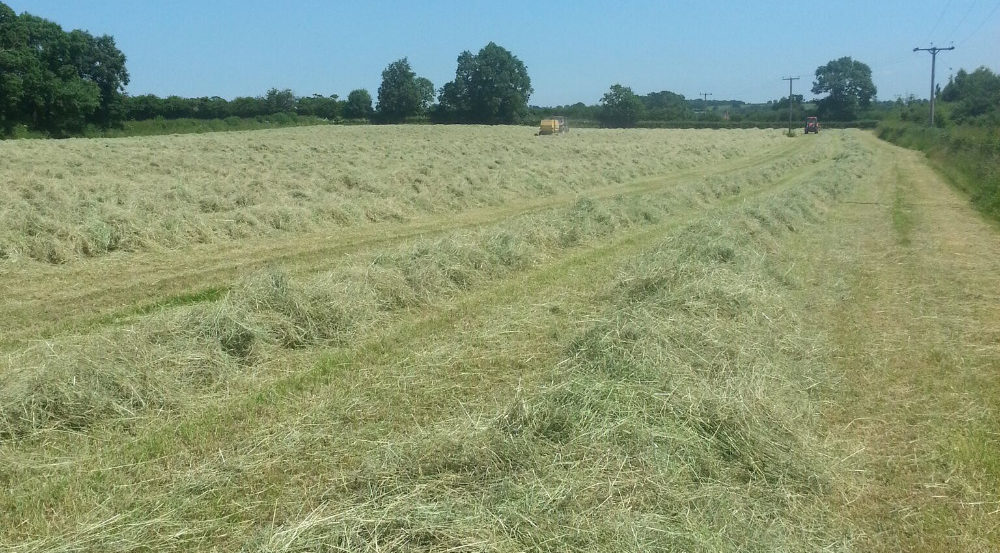
Hay is typically grown and harvested just once a year, with June or July being the ideal time for cutting. This depends on a spell of hot, dry weather, which allows the fields to be mown and the grass to dry naturally.
The hay is produced using a natural, organic-based approach, with no pesticides or herbicides applied. It is dried in the open air under the summer sun, helping it retain its natural fragrance and quality.
As a result, the hay often contains wildflowers, cow parsley, and other natural herbage. These plants grow naturally in the field and dry alongside the grass during the haymaking process, clearly reflecting the traditional, environmentally friendly methods used in its production.
The hay is turned repeatedly over a period of around three days, ensuring that every strand receives its share of sunshine and dries evenly. Once it has dried sufficiently, reaching approximately below 10% moisture content, it is ready to be baled.
Baling is typically carried out using large round or square bales, a modern method that is far less labour-intensive while maintaining the quality of the hay.
The bales are then transported to the barn, where they are stored for up to 12 months under dry, controlled conditions. Shortly before dispatch to you, the large bales are carefully broken down and repacked into our own smaller bales, just a few days before delivery, ensuring the hay reaches you in top condition.
Please be careful how you store the hay, its very important, a cool airy and dark place is the best with good fresh air circulation. Plastic storage containers like dustbins are not a good idea unless the lid is has a gap to help the air circulate, a warm damp environment will assist in the formation of mold and encourage bugs showing clearly it has been stored incorrectly.
To be on the safe side we recommend you buy smaller amounts more often and suggest our hay should be used within two months of purchase. Very occasionally, the hay may feel damp this happens when its been packed on a foggy damp day, there’s no harm in this just open and keep in a warm room for a couple of hours.
Please note that we are unable to guarantee that every animal will readily accept every batch of hay, as individual preferences can vary. In some cases, a rabbit may simply be off its food.
Hay can vary from batch to batch depending on the field, supplier, season, and harvest conditions. These differences can affect the smell, texture, and taste, which your rabbit may notice. In most cases, they simply need a little time to adjust to the new hay.
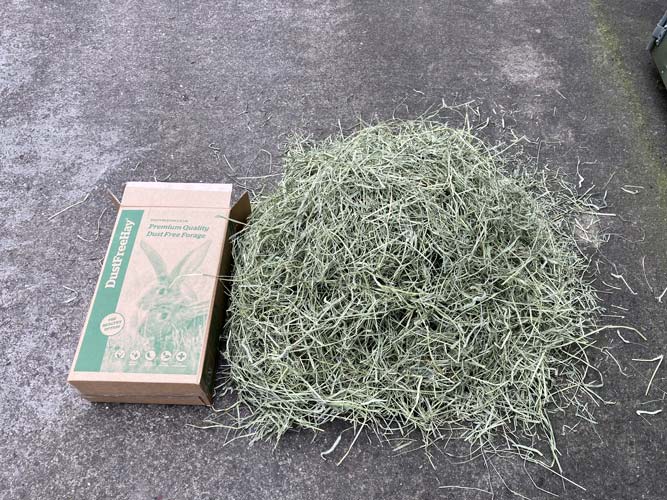
You might be surprised just how much there is in our bales once you have emptied it out, a small bale will easily fill an 80 litre household dustbin and weigh around 2kg while Large bales are around 7kg. Straw is slightly lighter but the same volume, its best illustrated in the videos on the cart pages showing the contents being emptied out. Image below shows the amount that is in a small bale or box. You can watch the video on the more info page.
The Hay is compressed into the bag under quite a bit of pressure. This can cause issues when getting the hay out as pulling the hay from the bag can lead to tearing resulting in short strands so we suggest you empty the hay out, either from the sack or box. You may have cut down the side of the bag to release some of the pressure especially the soft meadow hay.
We use DHL Next Working Day delivery. Deliveries are made Monday to Friday.
- After you order you will get a notification to confirm DHL will/have collected from us.
- When you order from our cart you have the option to leave a short message for the driver.
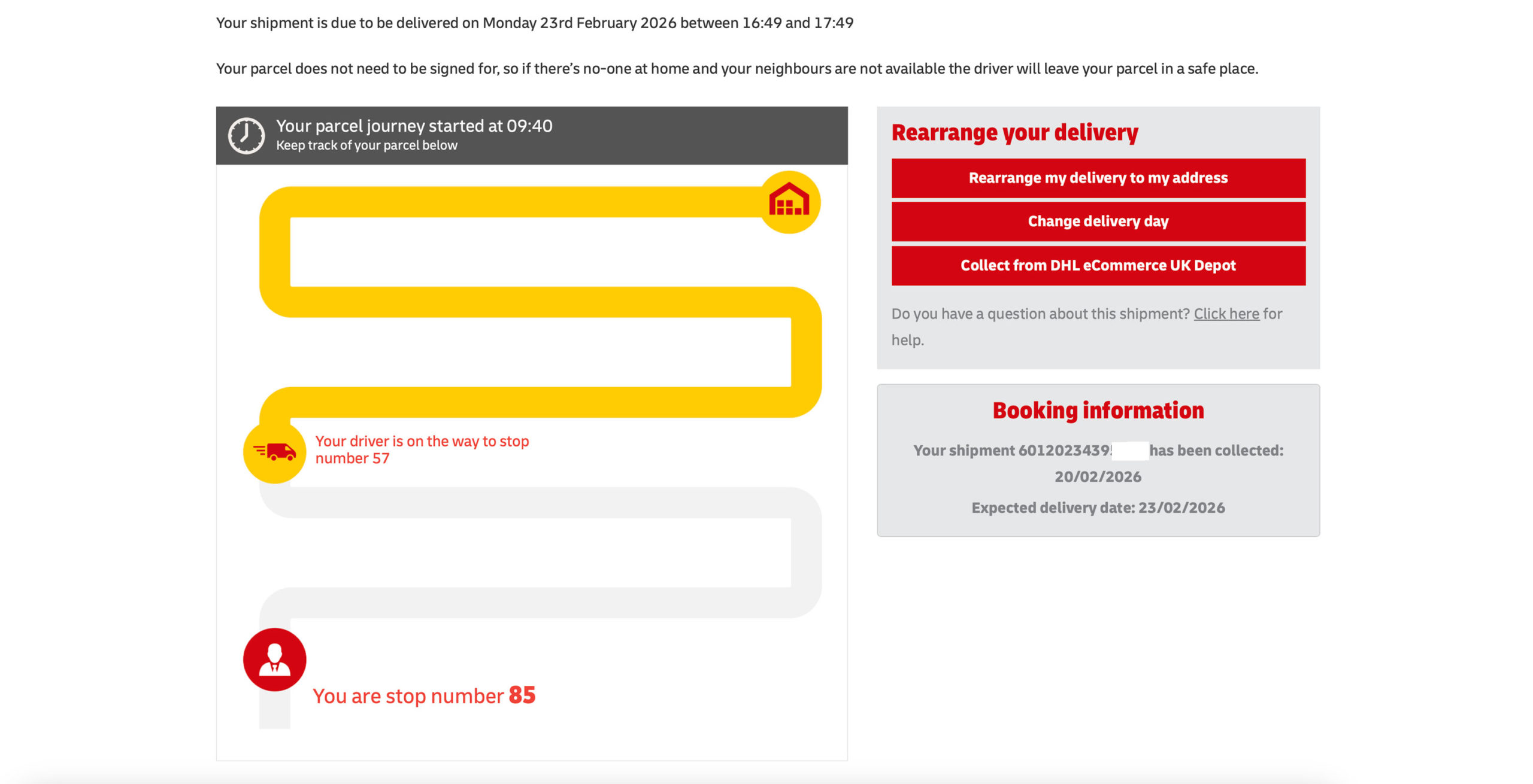
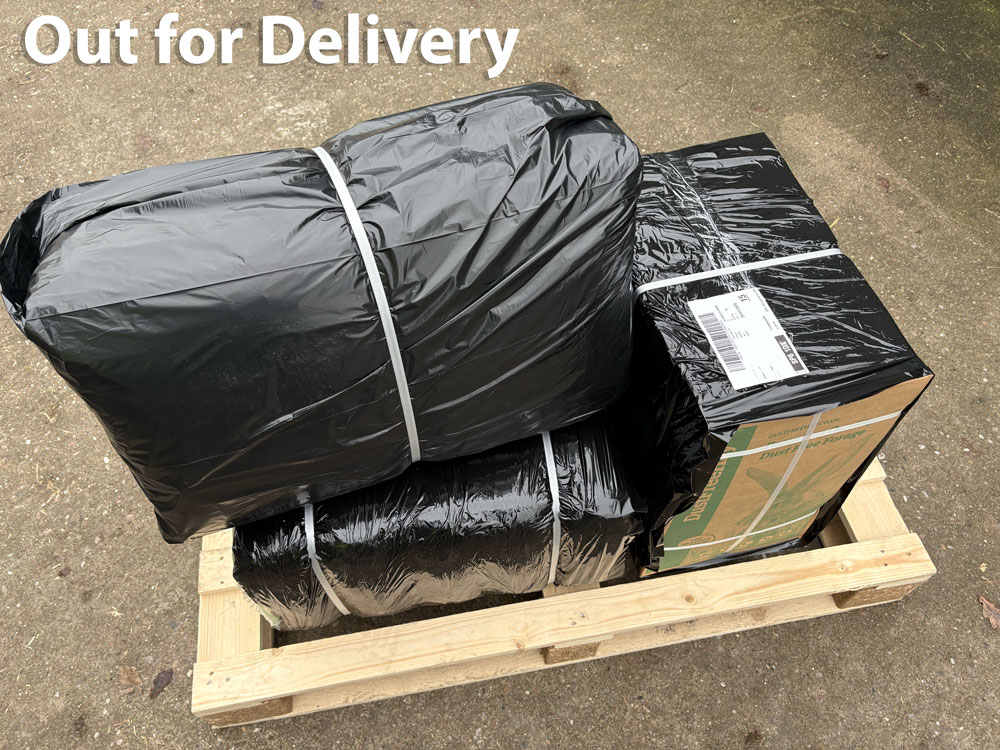
- Your text/email details you provide are used by DHL only to keep you informed on the progress of your order to give you an approx ETA of your delivery. A signature is not required as proof of delivery is recorded by GPS co-ordinates and also an image of the precise delivery spot.
- The tracking progress can be also followed by yourself on the DHL tracking site by entering the consignment number you received.
- Example below shows typical tracking information
The aim of our business is to supply quality forage that has the dust removed. Something that is often claimed but often just a sales line.
We started this business based on our unique dust removal process, which over the years we have learnt to make more efficient. we don’t think anyone else removes dust like we do. Indeed, most have no dust removal process at all and is sold out as it comes off the field. You should know it’s the very fine dust that you may only see in a shaft of sunlight floating around in the air, this is the real danger affecting both animal and keeper, an animal in an enclosed space has little choice but to breathe this in.